GLUTES SWITCHED OFF
Glutes switched off from sitting? Switch them back on.
Long sitting keeps the hip flexors short and leaves the glutes stretched and idle. Over time the glutes can be slow to fire when you need them, sometimes called dead butt syndrome, and the hamstrings and lower back pick up the slack. Switch them back on with daily glute work, long hip flexors and feet pointing straight.
By Muhammed Cam, founder · Updated
Where it starts · Sitting
Sitting switched your glutes off.
This is the second leak, close up. The glutes and abs go quiet in the chair, the hip flexors tighten, and the pelvis tips forward. The best athletes have big glutes for a reason.
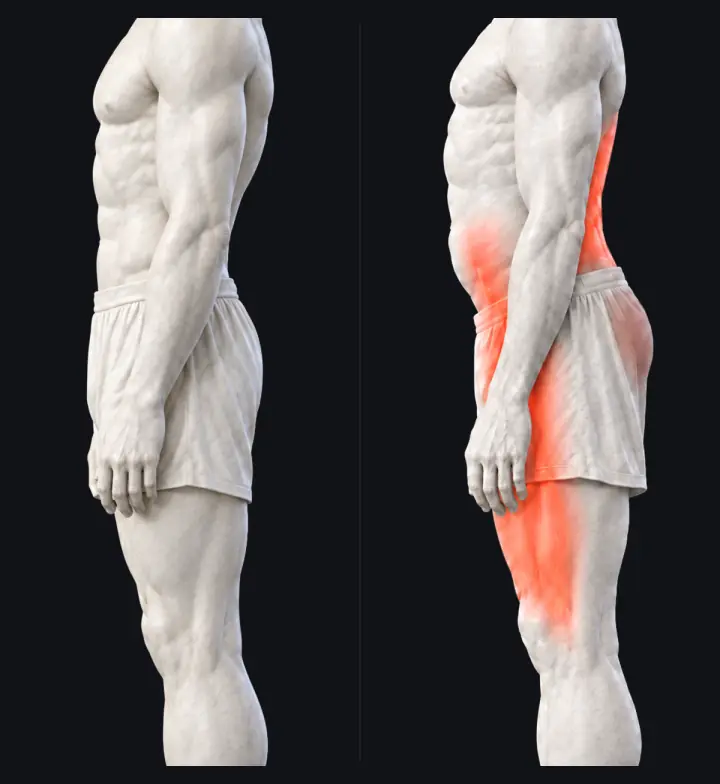
- Working
- Problem: tight or weak
The fix: Stack the pelvis. Glutes back on. The best athletes have big ones.
How do I know if my glutes aren't working?
Nobody's glutes are fully off, but in my experience they're often late to the party. Common signs:
- You feel glute bridges in your hamstrings or lower back, not your backside.
- Your hamstrings cramp or tighten when you sprint.
- The front of your hips feels tight, and your lower back aches after sitting.
- Your knees drift in when you squat, land or run.
- One side of your backside looks or feels flatter than the other.
A quick check: lie on your back and do a single-leg bridge. Where do you feel it? If it's the hamstring or the back, the glute on that side needs waking up.
Why do tight hip flexors switch the glutes off?
The hip flexors and the glutes sit on opposite sides of the hip. When the hip flexors are short and pulling, they tip the pelvis forward and the glutes are left stretched and slack. A muscle that sits long and idle for hours a day gets slower to switch on. That's the tipped pelvis in the anterior pelvic tilt guide.
The feet join in too. Turned-out feet and a dropped arch roll the thighs inward, which takes the side glute (gluteus medius) out of its best position. Pressing the big toe down and lifting the arch often makes the glute switch on by itself. Try it standing and feel the side of the hip.
Why do glutes matter for sport?
The glutes are the engine for sprinting, jumping, cutting and kicking. When they're slow, the hamstrings and lower back do work they weren't built to lead, and they often complain first. The side glute also keeps the knee over the second toe when you land, so sleepy glutes and knees caving in tend to show up together.
How do I switch my glutes back on?
A few minutes a day, done with the feet pointing straight and the big toe pressing down:
- Glute bridge: 2 sets of 10, pausing at the top for two seconds. Feel the backside, not the back.
- Half-kneeling hip flexor stretch: 30 seconds a side, squeezing the glute of the back leg.
- Side-lying leg lift or banded side steps for the side glute: 2 sets of 12.
- Split squat, slow: 2 sets of 8 a side, knee over the second toe.
- Stand up every 30 to 45 minutes when you sit for work.
Once they're awake, give them range: the hip mobility guide covers building strength at full length.
A 60-second self-test
Feel it now
- 1Stand barefoot, feet hip-width apart, both pointing straight ahead.
- 2Press the big toe down without curling it, and lift the arch.
- 3Soften the knees and keep each one over the second toe.
- 4Close your eyes and hold it for 30 seconds.
What pulls is tight. Stretch it.
What shakes or can’t hold is weak. Strengthen it.
On this page, notice
- Squeeze one glute at a time. Does one side switch on slower?
- If the front of the hip pulls when you stand tall, the hip flexor is tight. Stretch it. If the glute shakes or fades, it's weak. Strengthen it.

The app · coming soon
Not sure which leak is yours?
The From the Feet Up app is a posture and movement scan for iPhone. Six photos, bare feet, about three minutes. It reads five areas from the feet up and tells you what to fix first. Free for now.
Your photos are sent once for the read, never kept on our servers, and saved only on your phone.
Hear first when it launches.

Common questions
What is dead butt syndrome?
It's an informal name for glutes that have become slow to switch on, often after a lot of sitting. Some people call it gluteal amnesia. It usually shows up as tight hips, a sore lower back or feeling glute exercises in the hamstrings.
Can sitting really make your glutes weaker?
Long sitting leaves the glutes idle and the hip flexors short, and muscles that aren't used tend to get slower and weaker. Regular glute work and frequent breaks from the chair can often turn that around.
How long does it take to wake up your glutes?
Many people feel the glutes working better within a couple of weeks of daily practice. Building real strength and making it automatic in sport usually takes a few months.
Why do I feel glute bridges in my hamstrings or lower back?
Usually because the glutes are slow to fire, so other muscles take over. Bring the heels a little closer, point the feet straight, press the big toes down and squeeze the glutes before you lift.
Do tight hip flexors cause lower back pain?
They can contribute. Tight hip flexors can pull the pelvis forward and make the lower back arch and work harder. They're rarely the only factor, so pair stretching with glute and core work.
Educational, not a diagnosis or treatment plan. Sharp, severe, numb or worsening pain needs a qualified professional.