KNEES CAVING IN
Knees caving in when you squat? Look at the feet first.
Knees caving in, also called knee valgus, means the knee has drifted inside the second toe. It often starts at the feet: turned-out feet and a dropped arch roll the shin in, and sleepy glutes let the thigh follow. Point the feet straight, press the big toe down, lift the arch and keep each knee over the second toe.
By Muhammed Cam, founder · Updated
Where it starts · Shoes
Shoes turned your feet out.
It starts with the first leak. When the feet turn out and the arch drops, the knee swings out as the leg moves, then caves in over the arch on landing.
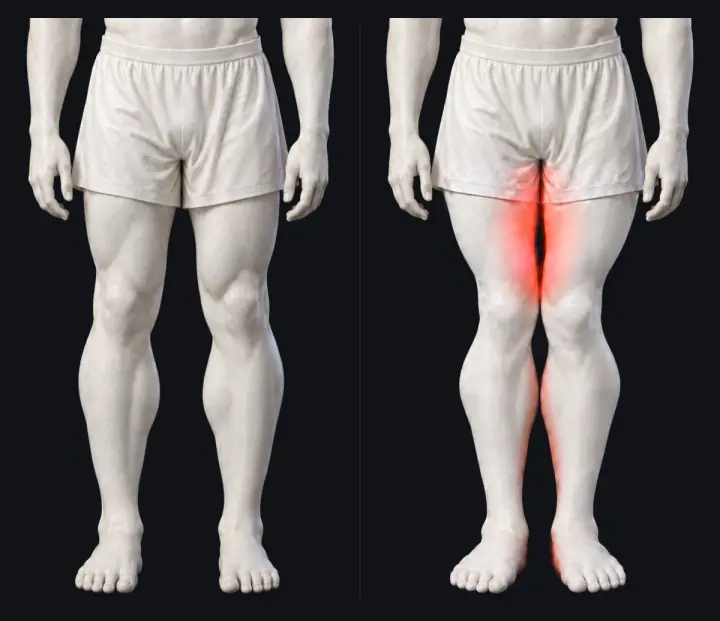
- Working
- Problem: tight or weak
The fix: Feet forward. Point them straight. Wake the arch.
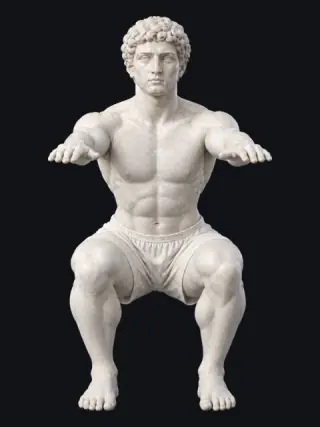
Why do my knees cave in when I squat?
Usually a few things at once, from the ground up:
- Feet turned out, so the shin starts the squat already rotated.
- An arch that drops under load, so the shin rolls in with it. The flat feet guide covers this.
- Stiff ankles, so the knee dives in to find depth when the shin can't travel forward.
- A sleepy side glute and weak inner thighs, so nothing holds the thigh on its line.
Stiff ankles are easy to miss. If your heels lift or your feet turn out as you go down, read the ankle mobility exercises guide.
Is it the feet or the hips?
Both ends, with the knee in the middle. The knee is a hinge: it bends and straightens well, but it doesn't like to twist. In a good squat, the arch lifts, the thigh turns out a touch, and the knee stays over the second toe while the twist runs through the glute.
When the arch drops, the shin rolls in from below. When the glutes are switched off, the thigh rolls in from above. Fix both. The guide to glutes switched off from sitting covers the top half.
How do I stop my knees caving in?
Slow down and give the knee a target:
- Squat to a box with the feet straight, big toe down and arch lifted. 3 sets of 8, three seconds down.
- Watch the knees in a mirror or film from the front. Each one should point over the second toe.
- A light band just above the knees can remind the glutes to push out. Take it off once the pattern holds.
- Slow split squats and lunges: knee over the second toe the whole way.
- Side glute work: side-lying leg lifts or banded side steps, 2 sets of 12.
How does the app check my knees?
The From the Feet Up app reads six photos of how you stand and finds what to fix first. Its new movement scan goes a step further: it watches a squat and a lunge and checks whether each knee stays over the second toe, side by side. Most people have one knee that drifts more than the other, and that tells you which side to work on first.
If your knees ache as well as cave, start with the wider knee pain guide.
A 60-second self-test
Feel it now
- 1Stand barefoot, feet hip-width apart, both pointing straight ahead.
- 2Press the big toe down without curling it, and lift the arch.
- 3Soften the knees and keep each one over the second toe.
- 4Close your eyes and hold it for 30 seconds.
What pulls is tight. Stretch it.
What shakes or can’t hold is weak. Strengthen it.
On this page, notice
- Bend the knees a little more, as if starting a squat. Which knee wants to drift in?
- If the inner thigh shakes to keep the knee out, it's weak. If the outer hip pulls, it's tight.

The app · coming soon
Not sure which leak is yours?
The From the Feet Up app is a posture and movement scan for iPhone. Six photos, bare feet, about three minutes. It reads five areas from the feet up and tells you what to fix first. Free for now.
Your photos are sent once for the read, never kept on our servers, and saved only on your phone.
Hear first when it launches.

Common questions
Is it bad if my knees cave in when I squat?
A little movement is normal, especially under heavy load. Knees that cave in on every rep can put extra twist through the knee over time. It's worth cleaning up, especially if you play sport.
What muscles are weak when knees cave in?
Often the side glute (gluteus medius), the inner thighs and the muscles that hold up the arch. Tight outer hips and calves can add to it.
Can flat feet make your knees cave in?
They can. When the arch drops, the shin rolls in and the knee tends to follow. Strengthening the arch and pressing the big toe down often helps the knee stay on line.
Should my knees go past my toes when I squat?
It's usually fine if the heels stay down and the knees track over the toes. Most people need the knees to travel forward to squat deep. Trouble starts when they cave in, not when they move forward.
Do knee sleeves stop knees caving in?
A sleeve can feel supportive and warm, but it doesn't change where the knee goes. Foot position, glute strength and ankle mobility do.
Educational, not a diagnosis or treatment plan. Sharp, severe, numb or worsening pain needs a qualified professional.